Panacea Bio Chem — Regenerative Science Monograph
In 2010, in a laboratory at Tohoku University in Sendai, Japan, Mari Dezawa was studying why some batches of mesenchymal stem cells behaved oddly. A long, harsh incubation that should have wiped out a culture instead left a handful of survivors that grew into embryonic-stem-cell-like clusters and stained positive for SSEA-3. Rather than a contaminant or an artefact, she had isolated a distinct, previously unnamed cell type hiding in plain sight inside tissue every hospital already handles. The finding appeared in the Proceedings of the National Academy of Sciences1; a year later, in March 2011, the same region was struck by the Tōhoku earthquake — a grim backdrop to a discovery about cells that endure disaster. The name followed the behaviour: Multilineage-differentiating Stress-Enduring — Muse.
Muse cells (Multilineage-differentiating Stress-Enduring cells): the non-tumorigenic pluripotent-like stem cell that homes to damage
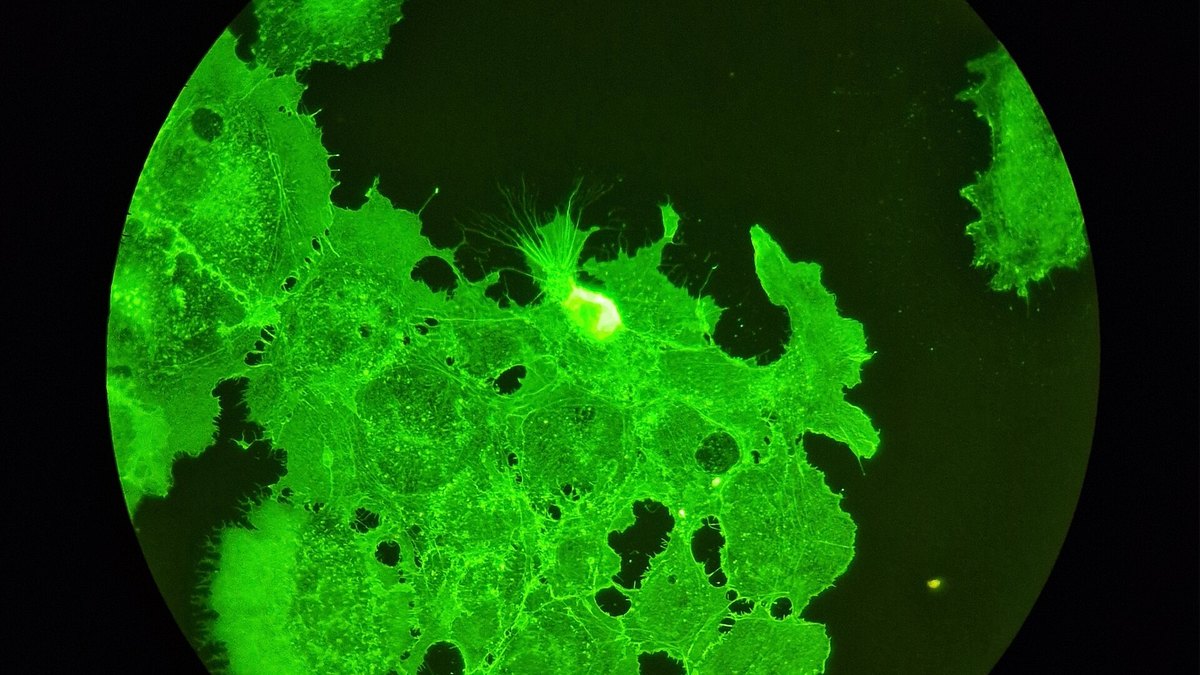
Muse cells — Multilineage-differentiating Stress-Enduring cells — are naturally occurring adult stem cells that carry a marker of pluripotency, SSEA-32 (Stage-Specific Embryonic Antigen-3), yet do not behave like the tumour-forming pluripotent cells science already knew. A single Muse cell can renew itself and give rise to cells of all three germ layers, yet in reported transplantation studies it forms no teratoma. Discovered in 2010 by Mari Dezawa at Tohoku University1, they sit quietly in bone marrow, blood and connective tissue, survive extreme stress, and — infused into the bloodstream — travel to injured tissue and repair it. This monograph explains what they are, why they matter, and where Panacea Bio Chem's work sits.
1. What a Muse cell is — in plain words
Every cell in your body started from one fertilised egg that could become anything — a state called pluripotency. Adults were long thought to have traded that away: our stem cells are supposed to be committed specialists that only top up their own tissue. The catch has always been that the cells which are genuinely pluripotent — embryonic stem cells, and lab-made iPS cells (induced pluripotent stem cells, reprogrammed with introduced genes) — are also dangerous: put them in a body and they can grow a teratoma, a jumbled tumour of hair, bone and gut tissue. Pluripotency and tumour risk seemed inseparable.
Muse cells break that pairing. They are a small, naturally present population inside the ordinary mesenchymal (connective-tissue) stem cells of adult bone marrow, skin dermis, fat and peripheral blood. They carry SSEA-3, a sugar marker normally seen on embryonic-grade cells, and from a single cell they can form nerve, muscle, liver and skin lineages. But their telomerase runs low, they divide slowly and in a controlled way, and across reported animal and human work they do not form tumours. In short: the good half of pluripotency, without the bad half — already inside you.
2. Why they are called "stress-enduring"
The name is literal. Dezawa's group found these cells by abusing a culture of mesenchymal cells — long enzyme digestion, low temperature, no serum, low oxygen. Almost everything died. The rare survivors, picked out by their SSEA-3 marker, formed floating clusters that behaved like pluripotent cells. The stress did not create them; it revealed them. That resilience is the point: a cell built to outlast catastrophe is exactly the cell you want to survive being frozen, shipped, thawed and dripped into a patient in crisis.
3. The open frontier — repair without the tumour risk
Regenerative medicine has spent two decades caught between two poles. iPS and embryonic cells are gloriously flexible but must be grown, differentiated and screened for rogue tumour-forming cells before they go anywhere near a person — slow, costly, and never entirely free of that risk. Ordinary adult mesenchymal stem cells are far tamer but only weakly pluripotent, and mostly help by secreting signals rather than becoming the missing tissue. Muse cells occupy the gap: pluripotent-like reach, adult-cell tameness, and no genetic reprogramming at all.
Their most striking trick is delivery. Injured cells leak a lipid signal, sphingosine-1-phosphate (S1P); Muse cells read it and home to the damage through the bloodstream, engraft, and quietly differentiate into whatever the site needs — heart muscle at an infarct, neurons at a stroke. Because they express the immune-tolerance molecule HLA-G, donor Muse cells have been studied as an off-the-shelf intravenous drip without HLA matching. In Japan, Life Science Institute, Inc. (Mitsubishi Chemical Group) carried a donor-derived Muse product (CL2020) into clinical trials for acute myocardial infarction, stroke, spinal-cord injury, epidermolysis bullosa, ALS and neonatal brain injury — a programme the Group discontinued on 14 February 2023, after what it called comprehensive and careful consideration of the latest clinical developments, timelines for commercialization, and its pharmaceutical business strategy7. The frontier question is no longer "can adult cells be pluripotent without tumours" — it is how far a single drip of endogenous repair cells can reach.
| Dimension | ES / iPS cells | Ordinary MSCs | Muse cells |
|---|---|---|---|
| Pluripotency | Full | Weak / limited | Pluripotent-like (3 germ layers) |
| Made how | Embryo / gene reprogramming | Isolated from tissue | Endogenous — no reprogramming |
| Teratoma risk | Yes | No | Non-tumorigenic (reported) |
| Reaches injury | Local delivery | Mostly paracrine | Homes via S1P after IV drip |
| Immune match | Often required | Variable | HLA-G tolerant; studied allogeneic |
4. Where Panacea Bio Chem sits
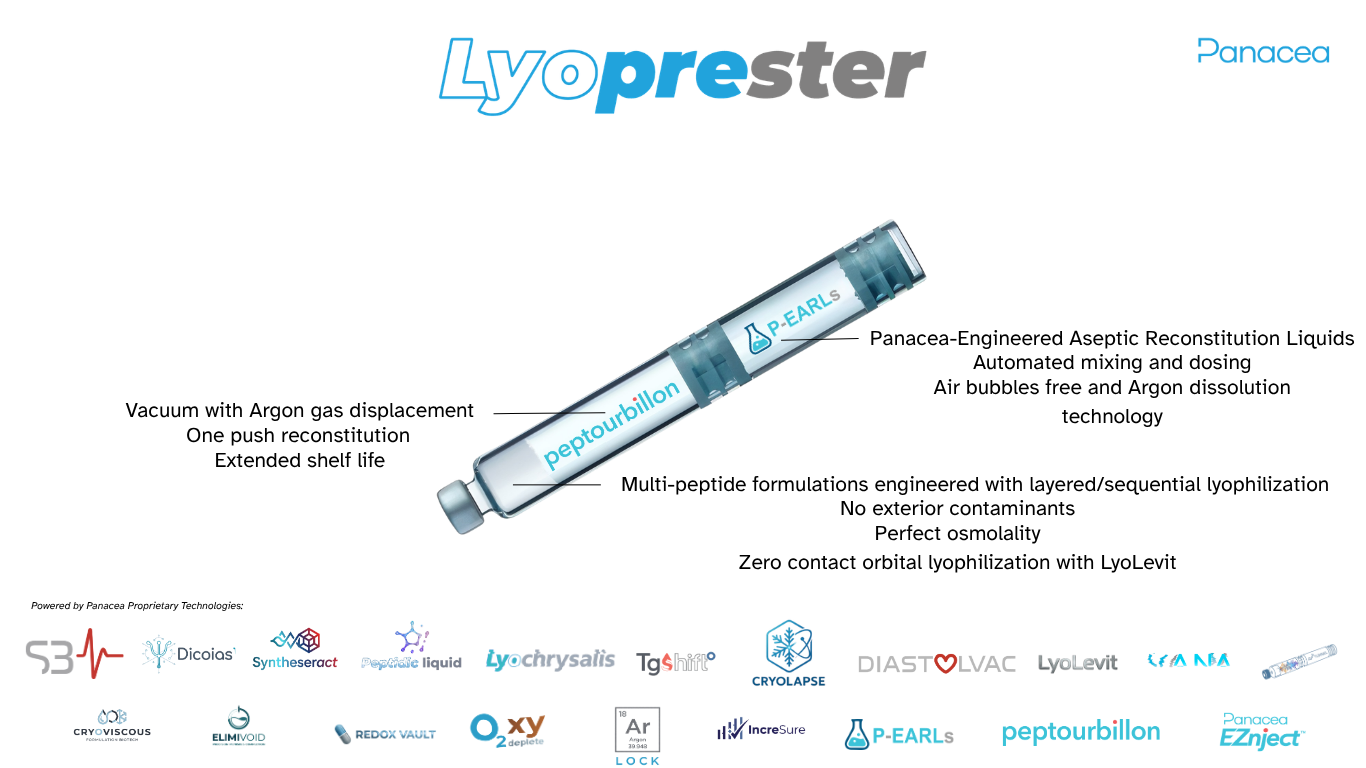
Panacea Bio Chem researches the endogenous-stem-cell sphere — the cells the body already carries for its own repair — and treats one problem as its focus: a stress-enduring cell is only useful at the bedside if it is still alive and intact when it arrives. Between a donor and a patient lie freezing, storage and transport, the very steps that quietly destroy fragile living material. That last mile — carrying cells, peptides and biologics from bench to point-of-use without losing what makes them work — is where Panacea's biopreservation craft lives, alongside its work in research-grade and custom peptide design →. The same gentleness a Muse cell needs is the gentleness Panacea builds into drying, glass-stabilisation and oxidation control: Cryolapse→, TgShift→ and RedoxVault→. Panacea does not claim a Muse-cell drug; it works, quietly, on keeping the biology that others discover intact all the way to the moment it is used.
5. Where it could matter most
Reasoning about highest-impact uses — where an endogenous, damage-homing, non-tumorigenic cell hits hardest against unmet need:
- Time-critical ischemia. A heart attack or stroke destroys tissue in hours. A cell that can be dripped in without matching or surgery, then steer itself to the infarct, is a rare fit for emergency care where local injection is impossible.
- The nervous system. Spinal-cord and neonatal brain injuries have almost no repair options; a cell that crosses to the lesion and forms neural lineages is aimed straight at the hardest gap in medicine.
- Fragile living inventory. None of the above works if the cells die in transit. The unglamorous, highest-leverage frontier is preservation — freezing, drying and shipping stress-enduring cells and their supporting biologics so they arrive viable. This is Panacea's home ground and an open R&D avenue in its own right.
Frequently asked
What does Muse stand for?
Muse stands for Multilineage-differentiating
Stress-Enduring cells — endogenous adult stem cells marked by SSEA-3, found in bone
marrow, blood and connective tissue, revealed by severe cellular stress, that can
differentiate into all three germ layers.
How are Muse cells different from iPS cells?
iPS (induced pluripotent stem)
cells are engineered by introducing genes into ordinary cells, and — like embryonic stem
cells — can form teratomas. Muse cells occur naturally in the adult body, need no gene
introduction, and in reported studies are non-tumorigenic.
Who discovered Muse cells?
They were discovered in 2010 by Mari Dezawa
and colleagues at Tohoku University, Sendai, Japan, and reported in PNAS.
How do Muse cells reach an injury?
Infused into the bloodstream, they home to
damaged tissue by following the sphingosine-1-phosphate (S1P) signal from injured
cells, engraft, and differentiate into the needed cell types — which is why they are
studied as a simple intravenous drip.
Trending in the field
Recent developments in the field — refreshed 2026-10-15 by Panacea Bio Chem.
- Coordinated mitochondrial quality control underlies oxidative stress resilience in MUSE stem cells — PubMed, 2026 Dec 31
- A pilot phase IIa randomized, placebo-controlled, double-blind trial of intravenous human pluripotent adipose-derived stem cells (PASCs) in Parkinson's disease: The REPOSE study — PubMed, 2026 Jan-Dec
- Hyaluronidase-enhanced delivery in gene therapy and regenerative medicine for improved vector, cell, and cargo access — PubMed, 2026
- Intravenously delivered multilineage-differentiating stress-enduring cells dampen hyperoxia-induced lung injury in a rat model with features of bronchopulmonary dysplasia — PubMed, 2026 Sep 4
References & further reading
- Kuroda Y, Dezawa M, et al. Unique multipotent cells in adult human mesenchymal cell populations (PNAS, 2010). PubMed.
- Muse cell — overview and SSEA-3 marker. Wikipedia.
- Stage-specific embryonic antigen-3 (SSEA-3). Wikipedia.
- Muse-cell homing and repair — clinical and preclinical literature. PubMed.
- Induced pluripotent stem cell (background: reprogramming & teratoma risk). Wikipedia.
- Muse cells in clinical development — trial registrations. PubMed.
- Mitsubishi Chemical Group — Discontinuation of the Development of a Regenerative Medicine Product (CL2020) Using Muse Cells (news release, 14 February 2023). mcgc.com.